A Minute Too Early
The station clock stopped at eleven seventeen, and sixty-three people missed their connections. That later appeared in the complaints figures. There was no record of the sixty-six people who caught the train they should have missed according to the timetable.
It was Ada’s first day in charge of the display boards. She’d been working for two weeks at the small station where her father used to operate the points. There were no pointsmen any more. There was a terminal, a coffee machine and a room behind the ticket counter with a window you could only open with a knife.
The big clock above platform two was mechanical. Ada had asked why it hadn’t been replaced. The station manager had said it was protected as a historic fixture. Once a week, a man came to wind it. His name was Mr Bell, he wore the same brown coat in summer and winter, and he talked to the clock while he worked.
On the Thursday after the disruption, Ada found a line on the small maintenance display behind the clock face: 14:32 Woman drops red glove.
She thought it was a joke. At two thirty-one, a woman stepped off the local train, balanced a travel bag on her suitcase and took off a glove to use her phone. The glove fell between the platform and the carriage.
Ada looked at her watch. Two thirty-two.
The next day she waited beside the clock case. The display had old split-flap digits and a narrow strip of letters that she’d assumed had been added later. At eight minutes past nine it read: 09:09 Dog runs across track one.
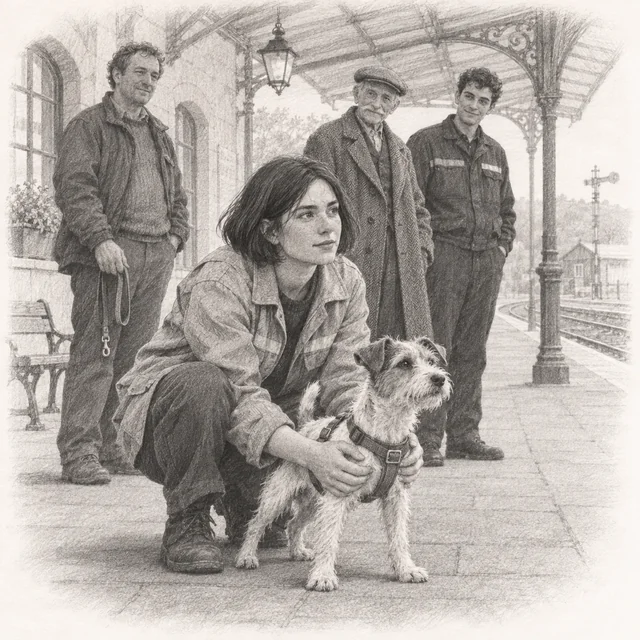
Ada ran down the stairs. A man was holding a lead with no dog attached. Behind him, a small terrier slipped under the barrier. Ada caught it by its harness before it reached the platform edge.
The sentence had vanished from the maintenance display.
She told Mr Bell about it. He listened without seeming surprised. Then he took off his cap.
“How long have you been reading it?”
“Since yesterday.”
“Then please don’t read it alone.”
They sat down in the room behind the ticket counter. Mr Bell didn’t know why the clock did it. He’d taken it over from his father, who had taken it over from his. Between long stretches of ordinary timekeeping, sentences appeared describing something that would happen exactly one minute later. Never any further ahead. Never with an explanation.
“Can you stop it from happening?”
“You stopped the dog.”
“What if it says something terrible?”
Mr Bell ran his hand over his cap. “Then you have one minute.”
Ada began to wait. She arrived early and stayed late. The clock announced a paper cup bursting, a kiss by the ticket machine and a boy leaving his trumpet behind. Ada saved the cup, let the kiss happen and got in the boy’s way just long enough for him to notice the trumpet.
It felt like picking little stones off a path other people were walking in the dark.
A week later, her colleague Deniz told her she looked as if she slept at the station.
“Almost.”
He brought her a sandwich. She didn’t tell him about the clock. The thought that someone might sell the warnings or take the clock away frightened her more than the exhaustion did.
On Monday it read: 18:06 Mr Bell falls on the north stairs.
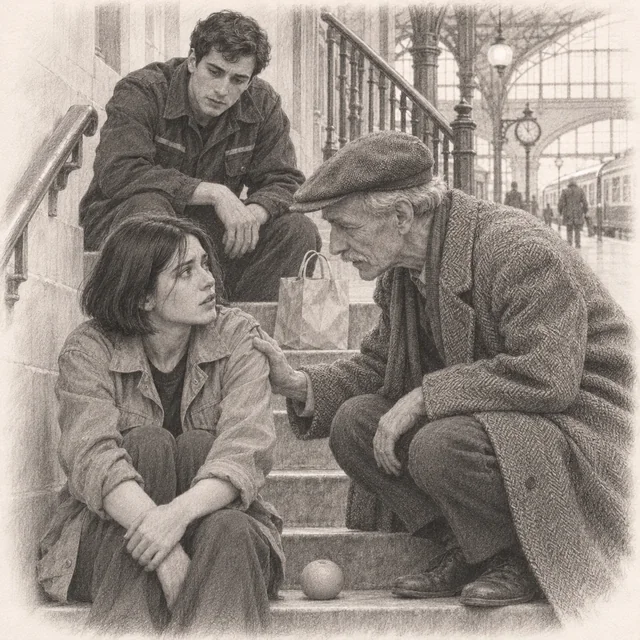
It was five past six. Ada ran. She slipped on the last step, landed on her knee and shouted his name. Mr Bell turned around. Behind him, an orange rolled out of an open shopping bag. He stood still until it rolled past his shoe.
Ada sat on the stairs, unable to get up. Mr Bell knelt beside her. A dark patch was spreading over her kneecap.
“You could have called me,” he said.
She showed him her phone. The battery was dead.
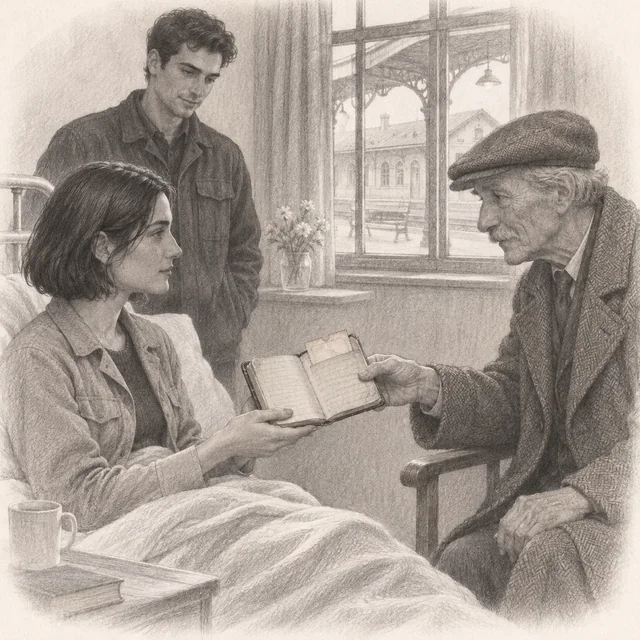
At the hospital, the doctor told her to rest for a few days. Ada thought about the clock while they put on a bandage. What might it say while she was away? Who was about to take one step too many on the platform?
Mr Bell visited the next morning. He brought an old notebook instead of a gift. It was full of sentences, many crossed out, with names and times in between. A train ticket was stuck to one page.
“It belonged to my wife,” he said. “The clock announced that a man would collapse on the tracks that evening. I waited for him. My wife went home alone. She fell in our kitchen. By the time I got there, she was already in hospital.”
Ada shut the notebook. “The clock didn’t show her.”
“No.”
“Then it doesn’t show everything.”
“It shows almost nothing.”
She couldn’t stop thinking about that. Until then she’d thought of the minute as a head start. Now it seemed like a narrow strip of light, with an entire town carrying on unnoticed outside it.
While Ada stayed home, she listened to the trains from her balcony. The station was two rows of houses away. She couldn’t see the rails, but she could tell which train was coming in by the sound of its brakes. She’d been able to do that as a child. Sometimes her father had taken her with him and set her on a high chair where her feet didn’t reach the floor.
Back then, the station had been full of people calling to one another. Her father corrected timetables in pencil and sometimes swore when a signal failed in winter. Ada had thought he always knew what would happen next. Only now did she remember how often he’d picked up the phone. How often he’d asked someone else for advice.
She called him. He lived on the outskirts of town now and grew tomatoes in a little greenhouse. Ada told him about her injured knee, but left out the display. She asked if he’d ever been afraid of making a mistake.
“Every day,” he said.
“You never let it show.”
“Perhaps not to you.”
She heard him set something down. Then he asked if she was having trouble at work. Ada said she sometimes knew too much and usually didn’t know enough. He didn’t laugh, though she’d almost hoped he would.
“Then write down what you actually know,” he said. “And below that, what you’re only guessing. On two separate lines.”
After the call, she got some paper. She wrote that the clock announced individual events, that it was possible to intervene and that it didn’t report everything. Below that, she tried to write down why it picked those particular events. She couldn’t think of an answer. She didn’t know whether preventing an accident caused another one elsewhere, either. She crossed that sentence out. She didn’t have a single piece of evidence for that fear.
Deniz visited her that afternoon. He brought the paperwork so she wouldn’t have to deal with all the reports that had piled up on her first day back. He’d heard about the orange and asked whether Mr Bell had at least got home safely.
Ada said yes. She wanted to explain the clock to him, but couldn’t bring herself to. She knew how the story sounded. Instead, she asked him if he could come in an hour early on Thursday. There was something she had to show him.
“If you’re going to run down another flight of stairs, I’d better come in two hours early,” he said.
After he left, Ada picked up the sheet with the two lines again. Under the things she knew, she wrote his name. She wondered whether you could put a person on a list of facts. Then she left it there.
The next morning, for the first time in weeks, she spent a whole hour without looking at a clock or a phone. She watered the plants, whose leaves were already wilting. Then she sat on the balcony and waited for a train to pass without checking which one it might have been. Her knee still hurt. But the afternoon no longer felt like work she’d missed.
When she returned to the station, she told Deniz everything. He didn’t believe her until the clock announced that a pushchair would roll into the ticket machine. They stood in front of it, and the mother noticed the brake was off.
“We need rules,” said Deniz.
They agreed they wouldn’t wait around all the time. Nobody would go running off alone. Whenever possible, they’d call for help. They’d let anything happen that posed no apparent danger. Mr Bell wrote the rules on a piece of cardboard and put it behind the clock case.
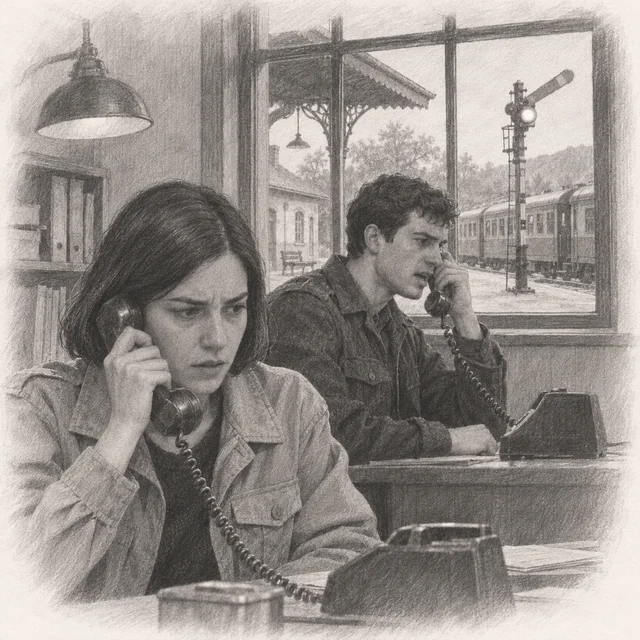
It went well for three weeks. Then came the sentence about the bridge.
19:41 Bridge girder fails under train 418.
Ada stared at the letters. The bridge was a kilometre beyond the station. Train 418 was due to leave in forty seconds. She grabbed the office phone. Deniz called the control centre. Ada called for an immediate stop signal.
The signaller asked why.
“Suspected damage to the river bridge.”
“Who reported it?”
Ada looked up at the clock. The second hand was on the eight.
She gave her name and activated the emergency stop. The signal went red. The train rolled two more metres and stopped.
No girder failed on the bridge.
The investigation lasted until morning. An inspector found a crack beneath a bearing plate. It was old, but dangerous. No one could say whether it would have caused a collapse that night. Ada was taken off duty for a week. She’d done the right thing, but couldn’t produce a report anyone could verify.
Mr Bell wanted to give a statement. Ada asked him to leave the clock out of it.
“Why?”
“Because tomorrow people will come and take it apart. And I don’t want anyone to build a safety system that only has something to say now and then.”
Deniz backed her up. His report said Ada had raised a specific concern and averted a danger. It didn’t say where the concern had come from. She received a formal warning for inadequate documentation and was allowed to return to work.
After that, the clock went quiet. It showed hours and minutes, nothing more. Ada caught herself breathing easier when the strip of letters stayed blank.
In summer, Mr Bell said he was going to retire. His hands were shaking. He showed Ada how to wind up the weight, where to put the oil and which screw was best left alone. She wrote it all down.
“And if the sentences come back?”
He held the little oilcan up to the light. “Then call Deniz.”
On his last day, he brought cake. They ate it in the room behind the ticket counter. Outside, train 418 pulled in, having crossed the bridge on its new bearings. No one in the carriage knew Ada had a warning in her file because of it.
At twelve minutes past four, a new sentence appeared. Ada happened to be alone at the clock case. 16:13 Mr Bell gets on the wrong train.
She looked out. There was a southbound train at platform two. Mr Bell wanted to go north, to his daughter’s. He was already lifting his foot onto the first step.
Ada went to the window and called him back. He turned, looked up at her and raised his hand. She pointed towards platform one. He nodded.
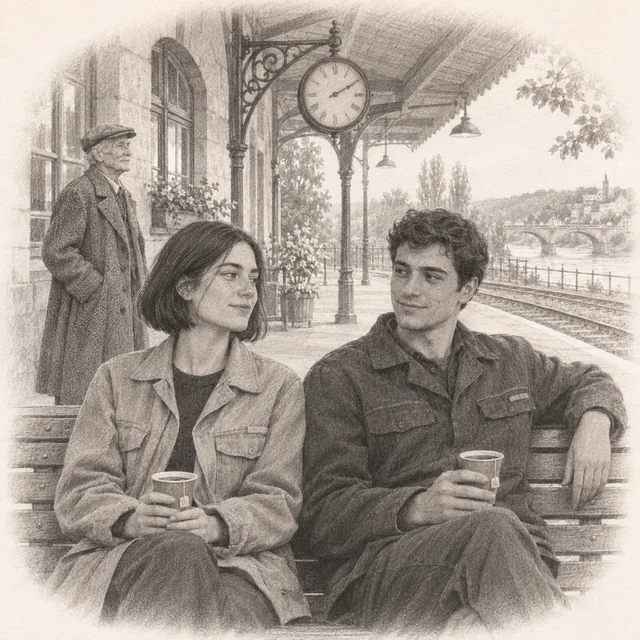
Later Ada sat on a bench with Deniz. She’d bought herself a tea and this time left the station key in the office. A girl played with a yellow ribbon. A man read a message and smiled without looking up. From the bridge came the low rumble of a freight train.
“Do you think we’re missing something right now?” Deniz asked.
Ada looked at the clock. The second hand moved forward as though it had never done anything else.
“I’m sure we are,” she said.
They stayed on the bench anyway, until they’d finished their tea.