A Day Without Lies
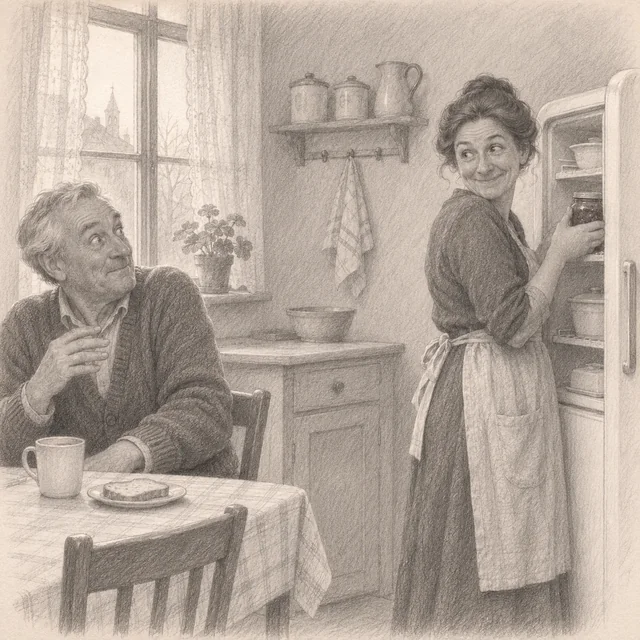
At three minutes past seven, the mayor told his wife he didn’t like her jam. What he’d meant to ask was whether there was any coffee left. The words came out anyway. His wife put the jar back in the fridge.
“I’ve only been making it for twenty-eight years because you always tell me you like it.”
They looked at each other. Then they laughed, still unaware.
At the same time, the baker told a customer the rolls were from the day before. On the bus, a schoolboy said he’d lost his ticket because he’d spent the money on something else. The supermarket cashier still managed her usual Have a nice day. When she tried to add that she was looking forward to her sister’s visit, she choked on the words.
By eight, the whole town knew. No one could say anything they themselves believed to be false.
At first people thought it was a prank, then some kind of poisoning, then a miracle. At the town hall, the mayor tried to say there was no cause for concern. All he managed was, “We don’t know what’s going on.”
In his secretary’s opinion, it was the most credible thing he’d said in office.
Mira ran the small town library. A group had already gathered outside when she unlocked the door. One woman wanted books on truth serums, a man demanded a philosophical explanation, and two teenagers asked whether you could force someone to say who they had a crush on.
“No,” said Mira.
It was nice to be able to say it so plainly. It was also her opinion, rather than a statement of the law. She noticed the difference and said so at once.
People were remarkably quick to confuse their new inability to lie with an obligation to say everything. A butcher demanded that his apprentice name the colleagues who made fun of him. A wife read questions to her husband from her phone. A father cornered his son in the hallway and asked whether he smoked.
The boy didn’t answer. After a while, he went to his room. The door slammed just as it did on any other day.
Mira wrote on the board at the library entrance: Nobody has to answer here. Underneath: Assumptions are not facts.
At ten, her sister Eva arrived. She hadn’t spoken to Mira in four months. Their quarrel had started with their mother’s house and ended with things older than the house itself.
Eva set a bag of sandwiches on the table. “I just happened to be nearby.”
She choked on the last word.
Mira waited.
“All right,” Eva said. “I wanted to see if it was happening to you, too.”
“Yes.”
“And?”
“I’m afraid to talk to you.”
Eva sat down as though she’d suddenly grown tired. “So am I.”
They ate their sandwiches without mentioning the quarrel. For Mira, that was already more peace than she’d expected.
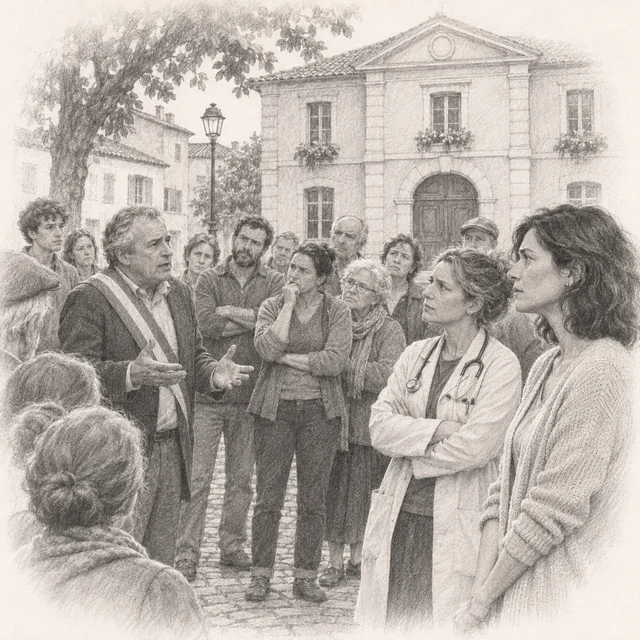
At noon, the mayor called a meeting in the town square. He wanted to gather reliable information. The headteacher reported that children were hurting one another with their questions. The doctor said there was no sign of physical danger and no explanation either. A man shouted that everything would finally come to light.
For years, he’d run a website about alleged shenanigans at the town hall. The mayor asked him to say exactly what he was accusing him of.
“You take money from the construction company.”
The words came out smoothly. The crowd fell silent.
The mayor answered just as smoothly, “No.”
A murmur went through the square. The man hadn’t lied. Apparently, neither had the mayor.
Mira stood beside the doctor. “He believes it,” she said. “That’s all.”
The doctor nodded and explained it aloud. People could evidently say what they believed. That didn’t make their beliefs true. The man with the website turned red. He said he’d seen proof. When pressed, it turned out he meant a blurry photograph and an anonymous comment.
The mayor could have savoured the moment. Instead, someone asked him whether the new sports hall would cost more than announced.
“Yes,” he said.
“How much more?”
“I don’t know exactly. I haven’t read the latest figures.”
This time nobody laughed.
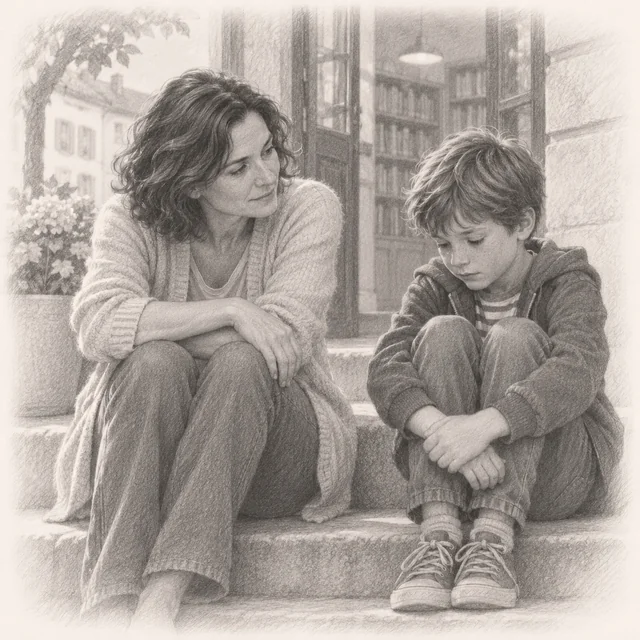
Mira went back to the library. Ben, a boy from her reading group, was sitting outside with his knees drawn up to his chest. At school he’d told his best friend he found her drawings boring. She’d cried. Now he thought he had to go back and tell her everything else he didn’t like about her.
“Why?” asked Mira.
“Because it’s true.”
Mira sat down beside him. “Is there something you like about her, too?”
“She waits for me when I walk slowly.”
“That’s true as well, then.”
He looked down at his shoes. “Do I have to apologise even though I didn’t lie?”
“You could apologise for hurting her.”
Ben thought about it. Then he stood up and asked if he could have a sheet of paper.
That afternoon, sales fell in some shops and rose in others. At the hairdresser’s, appointments were cancelled after a customer found out what people there thought of her husband. At the café, one cake sold particularly well because the server admitted it was the only one baked on the premises.
Mira watched from the window. She’d always thought much of everyday life was made up of needless lies. Now she saw how much of it was consideration, fear, convenience, or the wish to let a moment pass undisturbed. She didn’t yet know which of those things she’d miss.
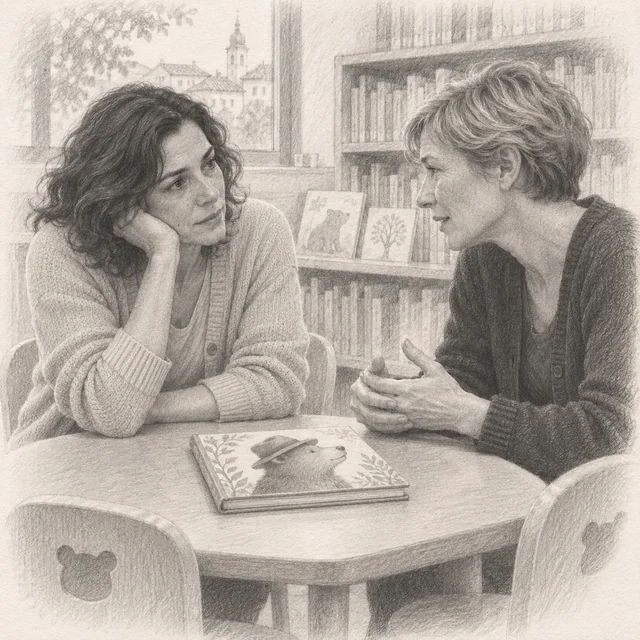
Eva came back shortly before five. This time she didn’t bring any sandwiches.
“I want to talk about the house.”
Mira closed the library early. They sat at the little table in the children’s section. Between them lay a book about a bear looking for his hat.
Their mother had died a year earlier. Eva wanted to sell the house. Mira had agreed and then put off every step. She’d misplaced documents, cancelled appointments with tradespeople and claimed she hadn’t been able to reach the estate agent. They didn’t need a miracle for that. They both knew it.
“You don’t want to share the money,” said Eva.
Mira could disagree. “Yes, I do.”
“Then you want to make all the decisions yourself.”
Once again she could disagree, but only in part. It took her a long time to find a sentence that didn’t stick in her throat.
“I want someone to say I did enough.”
Eva looked at her.
Mira had looked after their mother for the last three years. Eva had lived in another town, sent money and asked over the phone how things were going. Mira had always answered: I’m managing. She’d expected Eva to hear the opposite.
“You never asked me to come,” Eva said.
“I didn’t want to have to ask.”
Eva picked up the book about the bear and put it on the next pile. There were tears in her eyes, but her voice stayed steady.
“I was glad you did it all. And when I noticed how tired you were, I looked away.”
Mira waited for relief. It didn’t come. The words didn’t make the past years any easier. They finally gave the years a shape the sisters could talk about.
They didn’t agree to sell. They agreed to spend a Saturday at the house together, with three boxes: keep, give away, decide later. Eva would call the estate agent. Mira would bring the keys. It was a small plan, but neither of them had to pretend it made everything all right.
Towards evening, people came from neighbouring towns. There, nobody had any trouble telling a lie. They wanted to see the phenomenon and put questions to the townspeople as if they were a street act. Some filmed them. The mayor kept the square open but asked people to leave the children alone. His voice sounded tired.
At nine that evening, it began to rain. The visitors vanished. The lights were still on in the library. Mira had left the door open. People came in, sat for a while and left again. Some wanted to talk. Others just wanted to be somewhere nobody demanded an answer.
Ben brought a letter. At the bottom his friend had drawn a hat on a very badly drawn bear. Above it she’d written: You don’t have to like my pictures. But you don’t have to look at them all the time, either. Ben smiled for the first time that day.
Shortly before midnight, Eva brought two cups of soup. They sat on the steps by the entrance. The rain had stopped. The lights from the square shone on the paving stones.
“I never looked in your diary,” Eva said suddenly.
Mira turned her head.
Eva put her hand over her mouth. Then they both laughed. The words had come out without resistance. It was over.
The next morning, the mayor thought the jam was excellent again, or so he said. His wife set a jar of honey in front of him. A preliminary cost estimate for the sports hall appeared at the town hall. It gave a wide range and noted that several items were still uncertain.
Mira left both sentences on the board outside the library. After a week, she wiped away the rain marks around them and wrote them out again.
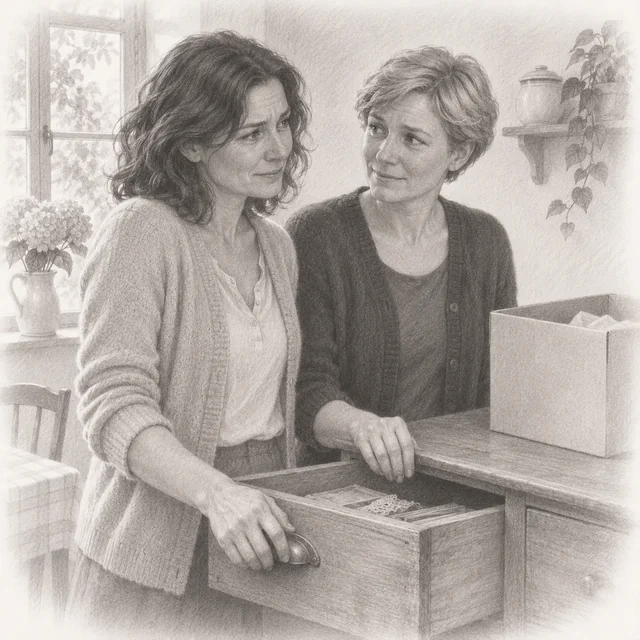
On Saturday she went with Eva to their mother’s house. They sat in the kitchen first. Then they opened the first drawer. When Eva asked if she was ready, Mira said, “Not quite.”
She could have lied again. That made the answer harder. Eva nodded, and they began anyway.